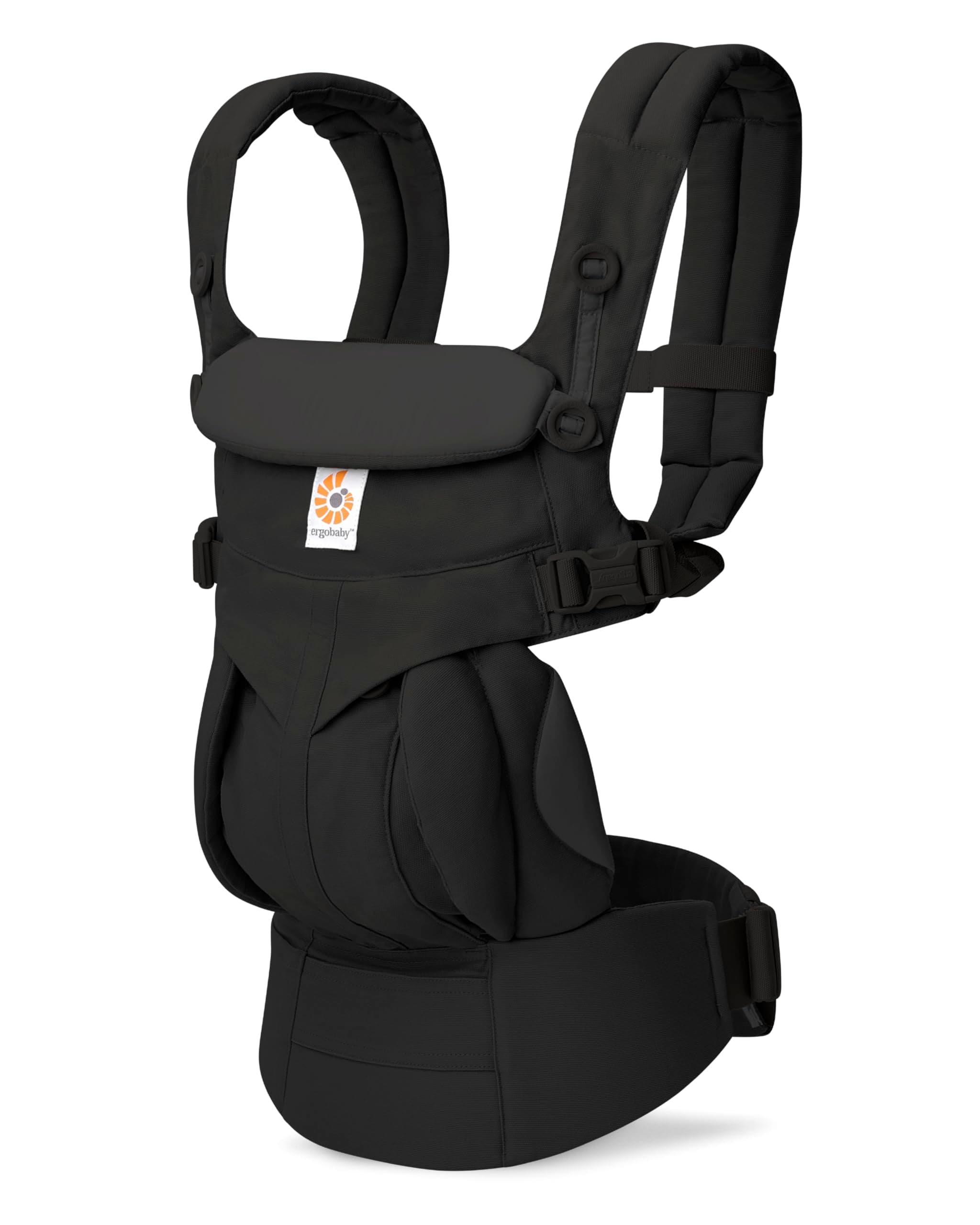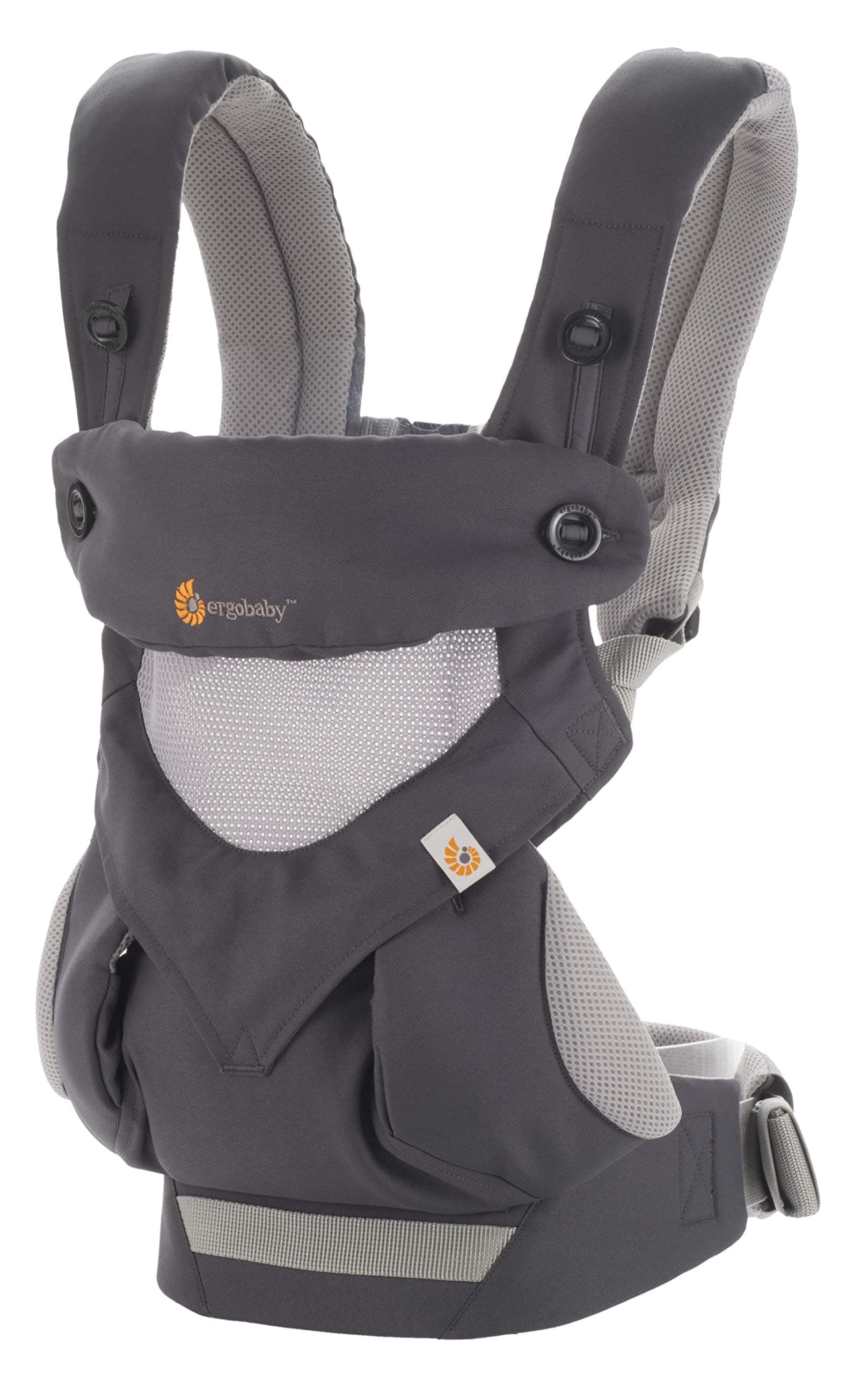
Ergobaby Carrier Carry Positions Carbon
Best for: safety-conscious parents of newborns who value IHDI certification and multi-position versatility, willing to invest in a carrier that grows with their child
Check price on Amazon— $109Pros
- IHDI (International Hip Dysplasia Institute) certified — meets the gold standard for hip-healthy positioning, critical for preventing developmental dysplasia in newborns
- Newborn insert included in the box — no $25-40 separate purchase required, and provides proper head/neck support for infants 7-12 lbs
- 4 carry positions including back carry — parents can transition from newborn front carry to back carry as child grows, extending usability to age 3-4 without purchasing a second carrier
- 5,840 reviews at 4.7 stars — the most-validated option in this selection, indicating consistent real-world performance across diverse user scenarios
Cons
- Buckle-style fastening requires practice — first-time users report 5-10 minutes to master proper shoulder strap adjustment; some parents find it slower than wrap carriers for quick in-and-out
- Newborn insert is required for babies under 12 lbs and must be removed and stored — adds a step compared to carriers with integrated newborn sizing
- Heavier than hip-seat alternatives (approximately 1.5 lbs) — noticeable weight difference during all-day wear, though offset by superior lumbar support
Full review
The carrier includes a newborn insert in the box, so you're not buying a $25–40 accessory separately. The insert properly supports your infant's head and neck from 7–12 lbs, addressing one of the most critical safety concerns with newborn carriers. Once your baby hits 12 lbs, you remove the insert and the carrier adjusts for their growing body. The four carry positions — front inward, front outward, hip, and back — mean you won't need a second carrier. You can start with front-facing inward for a newborn, transition to front-facing outward around 5–6 months when they're curious about the world, move to hip carry for toddlers, and eventually back carry for older kids. That versatility extends usability to age 3–4.
With 5,840 reviews averaging 4.7 stars, this is the most-validated carrier in this comparison. That volume of real-world feedback signals consistent performance across different body types, climates, and usage patterns.
The buckle-style fastening has a learning curve. First-time users typically spend 5–10 minutes figuring out the shoulder strap adjustment, and some parents find it slower than wrap carriers for quick in-and-out trips. The newborn insert, while included, is another piece to manage — you have to remove and store it once your baby outgrows it. The carrier itself weighs about 1.5 lbs, noticeably heavier than hip-seat alternatives, which compounds fatigue during all-day wear. That said, the extra weight comes from superior lumbar support in the waistband, which many parents consider a fair trade-off.
Rating Scores:
- Safety: 9.6
- Ease of Use: 8.4
- Cleaning: 8.0
- Durability: 9.2
- Value: 8.7
Ergobaby Carrier Carry Positions Carbon
safety-conscious parents of newborns who value IHDI certification and multi-position versatility, willing to invest in a carrier that grows with their child