KRUPS Precision Espresso PourOver ColdBrew
Best for: occasional French press users on a tight budget who grind fewer than 2 times per week and accept sediment as a trade-off
Check price on Amazon— $13.98Pros
- Entry-level price of $13.98 — 74% cheaper than the Cuisinart, making it accessible for casual French press drinkers testing the hobby
- Compact size fits in small kitchens or travel bags — dimensions under 4×4 inches, ideal for apartment dwellers
- Stainless steel grinding bowl is dishwasher-safe — lowest maintenance burden of the three options
Cons
- Blade grinder produces inconsistent particle sizes — 40-60% of beans are over-ground to powder, causing excessive sediment and bitter taste in French press
- No grind settings: pulse mode requires manual timing — difficult to achieve the coarse consistency French press demands, leading to 3.8-star rating vs 4.3+ for burr alternatives
- Grinds only 0.5 cups per cycle — requires 4 separate batches for a standard 8-cup French press, making it impractical for daily use
Full review
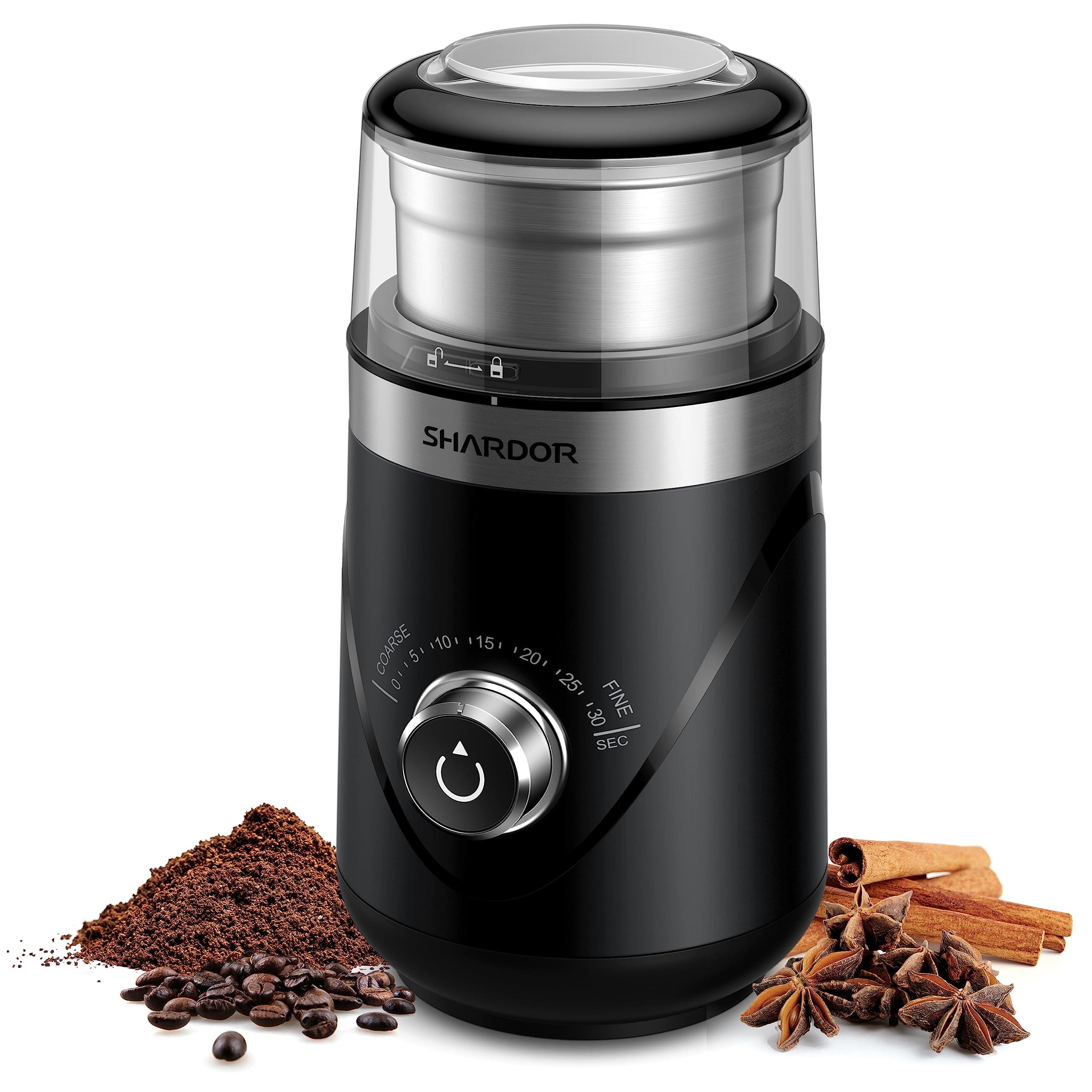
This is a blade grinder. That matters more for French press than for almost any other brew method. Without a paper filter, your cup catches everything the grinder produces — including the 40-60% of beans that blade grinders pulverize into powder. The result is sediment, bitterness, and the kind of gritty cup that makes people think they don't like French press. The 3.8-star rating across 920 reviews reflects exactly this: a 0.7-star gap below the SHARDOR isn't noise, it's signal.
There are genuine upsides. The stainless steel grinding bowl is dishwasher-safe — the lowest maintenance burden of any grinder here. It's compact enough to fit in a travel bag or a cramped studio kitchen. And at $13.98, losing it or breaking it doesn't sting.
But the grind consistency score of 4.1/10 tells the real story. No grind settings means you're timing pulses manually and hoping for the best. For a standard 8-cup French press, you'd need 4 separate grinding batches at 0.5 cups per cycle. That's not a morning routine — that's a project.
Skip this one if French press is your primary brew method. It belongs in a camping kit, a spare drawer, or the hands of someone who's genuinely just curious whether they'll like freshly ground coffee before spending more.
Rating Scores:
- Performance: 5.2/10
- Grind Consistency: 4.1/10
- Ease of Use: 7.3/10
- Cleaning: 8.8/10
- Value: 8.1/10
- $13.98 entry price — 74% cheaper than the Cuisinart, low financial risk for first-time grinders
- Compact footprint under 4×4 inches — fits in small kitchens, travel bags, and cramped countertops
- Dishwasher-safe stainless steel bowl — zero effort to clean, the one category where it genuinely leads
- Blade grinder produces 40-60% powder — causes excessive sediment and bitterness in French press, the core problem with blade grinders
- No grind settings — coarse consistency requires manual pulse-timing with unpredictable results
- Only 0.5 cups per cycle — 4 separate batches needed for an 8-cup French press, impractical for daily use
Best for: occasional French press drinkers on a very tight budget who accept some sediment and grind fewer than twice a week.
KRUPS Precision Espresso PourOver ColdBrew
occasional French press users on a tight budget who grind fewer than 2 times per week and accept sediment as a trade-off