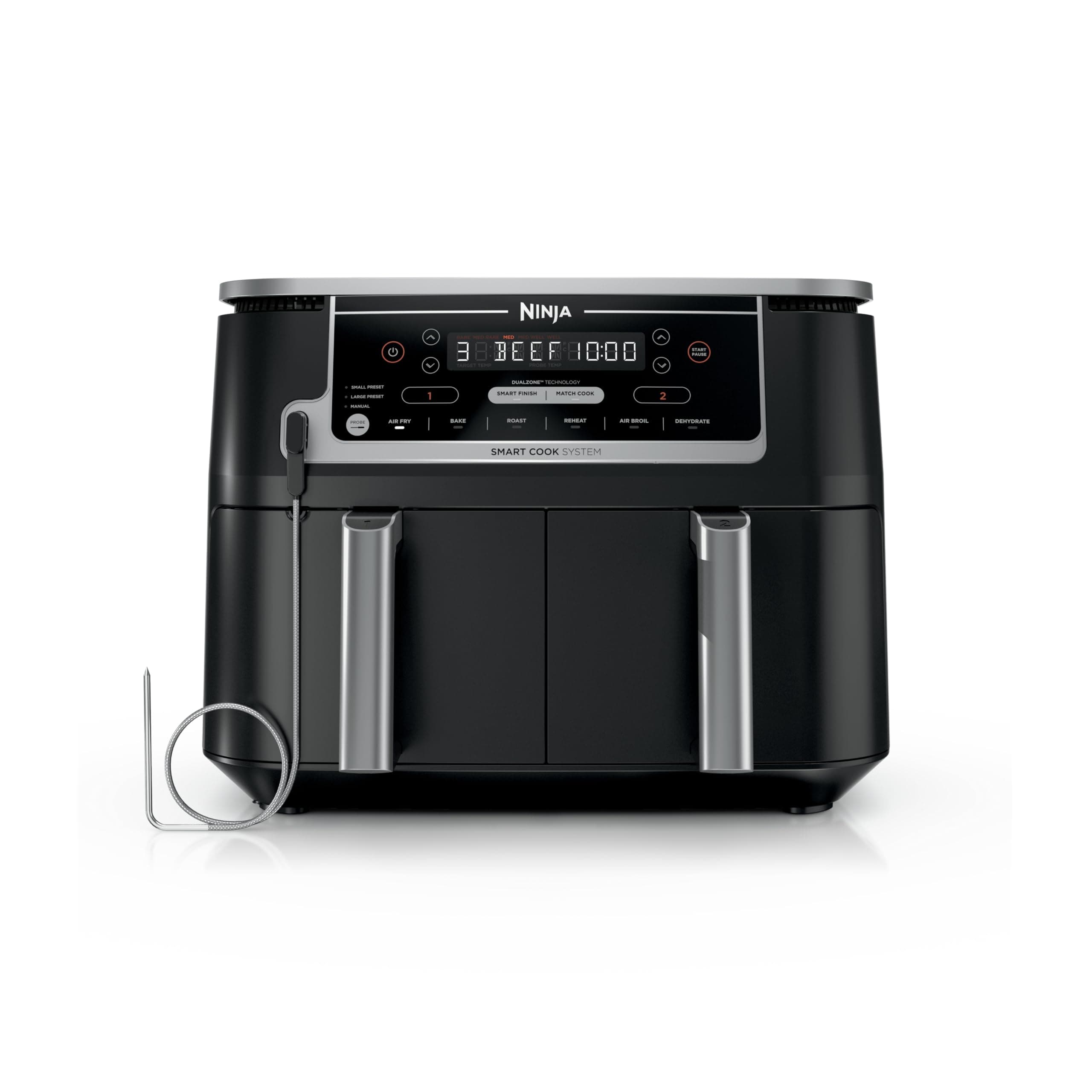
Ninja DZ550 Independent Thermometer Dehydrate
Best for: serious home cooks and meal preppers who value dehydration capability and simultaneous dual-temperature cooking
Check price on Amazon— $199.99Pros
- Dual independent baskets allow simultaneous cooking of two different foods at different temperatures — users report cooking fries at 400°F while dehydrating jerky at 160°F in the same unit
- Dehydration function with temperature control (95-410°F range) — enables jerky, fruit leather, and vegetable chips without a separate appliance
- 4.7-star rating across 5,200 reviews — highest-rated option in this selection, with users praising reliability and versatility
Cons
- Dual-basket design with independent controls adds complexity — learning curve for first-time users, and manual switching between modes required for synchronized cooking
- At $199.99, costs 122% more than the TurboBlaze and 25% more than the Instant Vortex — premium pricing justified mainly for dehydration feature
- Larger footprint (16×14 inches) and heavier (12+ lbs) — requires permanent counter real estate and difficult to store or move
Full review
Performance (9.3) | Ease of Use (8.0) | Cleaning (8.6) | Build Quality (9.1) | Value (8.2)
The dual independent baskets with separate temperature controls are genuinely useful for meal preppers and serious home cooks. Owners report using the dehydration function (which runs from 95°F to 410°F) for jerky, fruit leather, and vegetable chips — replacing what would otherwise require a separate $60-100 dehydrator. At 4.7 stars from 5,200 reviews, it's the highest-rated option in this comparison.
That said, the complexity is real. Synchronizing two baskets with independent controls takes practice, and first-time users consistently mention a learning curve in reviews. The 16×14 inch footprint and 12+ lb weight mean this fryer isn't getting stored in a cabinet — it needs a permanent spot on your counter.
At $199.99, you're paying 25% more than the Instant Vortex and 122% more than the TurboBlaze. The premium is justified if dehydration and dual-temperature cooking are features you'll actually use. If you just want to air-fry chicken and vegetables, you're overpaying.
Pros:
- Dual independent baskets cook two foods at different temperatures simultaneously — fries at 400°F and jerky at 160°F in the same unit, at the same time
- Dehydration function covers 95°F-410°F range — replaces a separate dehydrator for jerky, fruit leather, and vegetable chips
- 4.7-star rating from 5,200 buyers — the highest-rated pick in this comparison, with consistent praise for reliability and versatility
- Independent dual-basket controls add real complexity — first-time users report a noticeable learning curve, especially for synchronized cooking
- $199.99 is 25% more than the Instant Vortex Plus Rotisserie 10 — the premium only makes sense if you'll use the dehydration feature regularly
- 16×14 inches and 12+ lbs means this lives on your counter permanently — storing it in a cabinet isn't realistic
Best for: serious home cooks and meal preppers who want dehydration capability and simultaneous dual-temperature cooking in one appliance.
Ninja DZ550 Independent Thermometer Dehydrate
serious home cooks and meal preppers who value dehydration capability and simultaneous dual-temperature cooking