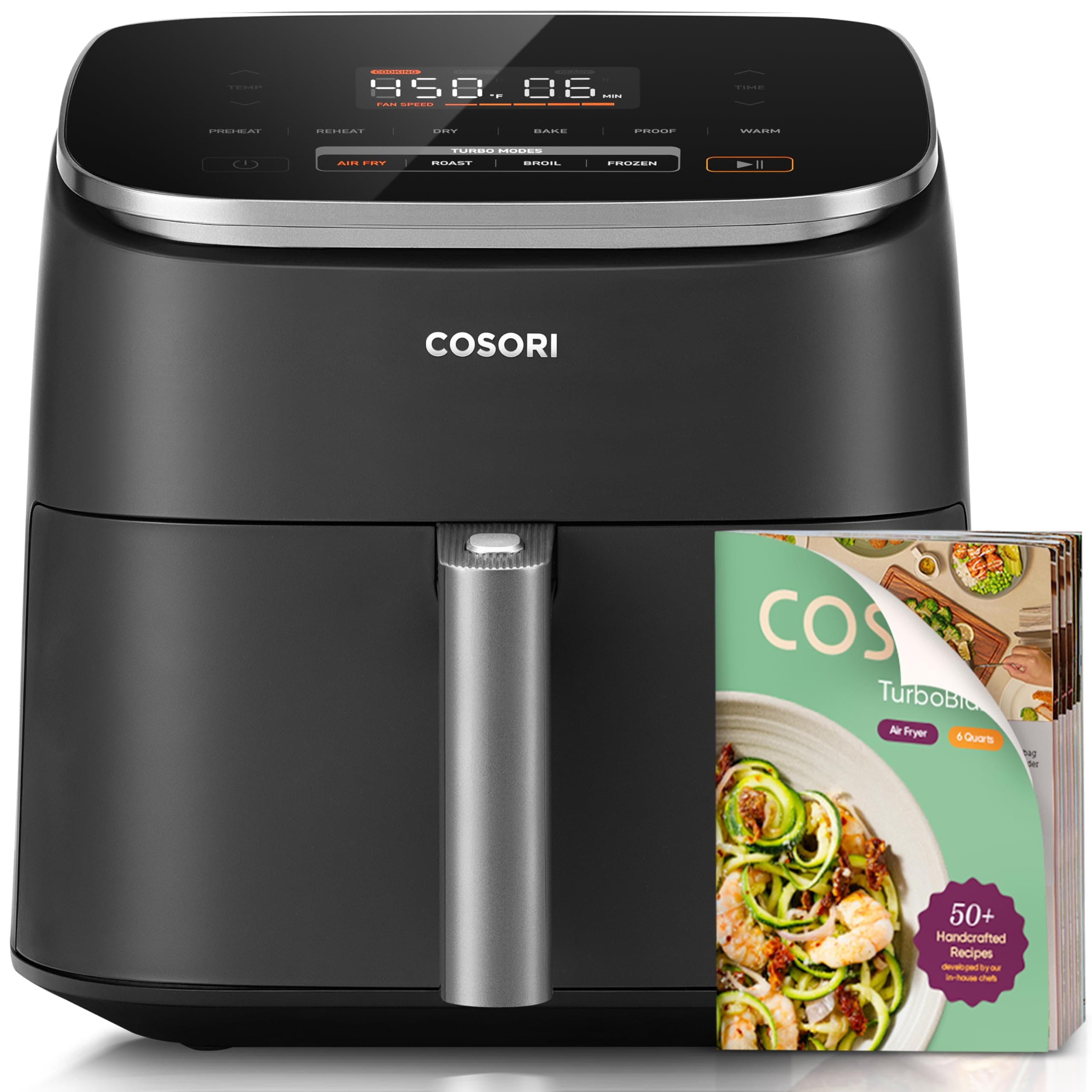
TurboBlaze Premium Ceramic Coating 90°C 450°F
Best for: budget-conscious singles and couples seeking an affordable entry point without hand-washing hassle
Check price on Amazon— $89.87Pros
- 3.5-quart capacity fits 2-3 servings of fries or chicken wings — suitable for individuals and small families
- Ceramic coating requires no oil for most foods — reduces cleanup time compared to traditional fryers
- Dishwasher-safe basket and tray — eliminates hand-washing friction that plagues budget air fryers
Cons
- 450°F max temperature is 50°F lower than premium models — results in slightly longer cook times for crispy textures
- 3.5-quart capacity limits batch size — not practical for families of 5+ or meal prep in bulk
- Ceramic coating durability concerns in reviews — some users report peeling after 6-12 months of regular use
Full review
Performance (7.8) | Ease of Use (8.5) | Cleaning (9.0) | Build Quality (7.2) | Value (9.1)
The ceramic non-stick coating means most foods release cleanly without oil, and both the basket and tray go straight into the dishwasher. That's the detail that drives the 9.0 cleaning score — and it's the detail that budget air fryer buyers consistently overlook until they're scrubbing stuck-on cheese at 10pm.
At $89.87, you're getting a 3.5-quart capacity and a 1500W element that tops out at 450°F. That 50°F gap versus premium models translates to slightly longer cook times when you want genuinely crispy textures. Not a dealbreaker for most foods — but you'll notice it on thick-cut fries or chicken thighs with skin.
Here's the durability concern worth flagging: some owners report ceramic coating peeling after 6-12 months of regular use. If you're cooking daily and expect this to last three years, you may be disappointed. For occasional use or as a starter fryer, the value holds up.
Pros:
- Dishwasher-safe basket and tray — the one feature that separates this from most budget air fryers and saves real time
- Ceramic non-stick coating requires no oil for most foods, cutting both calories and cleanup friction
- At $89.87, it's the lowest entry point here — and the 4.3-star rating from 2,100 buyers confirms it delivers on the basics
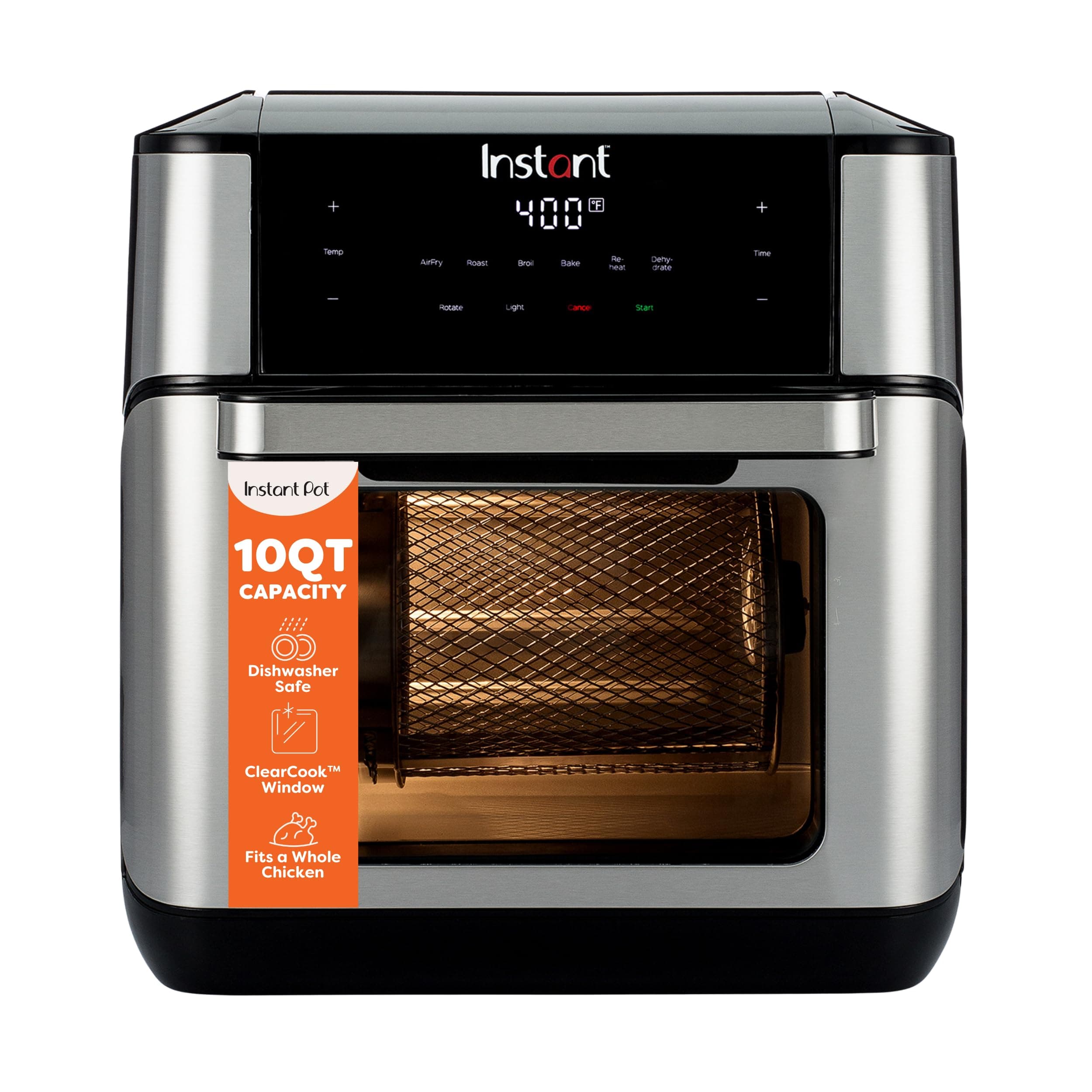
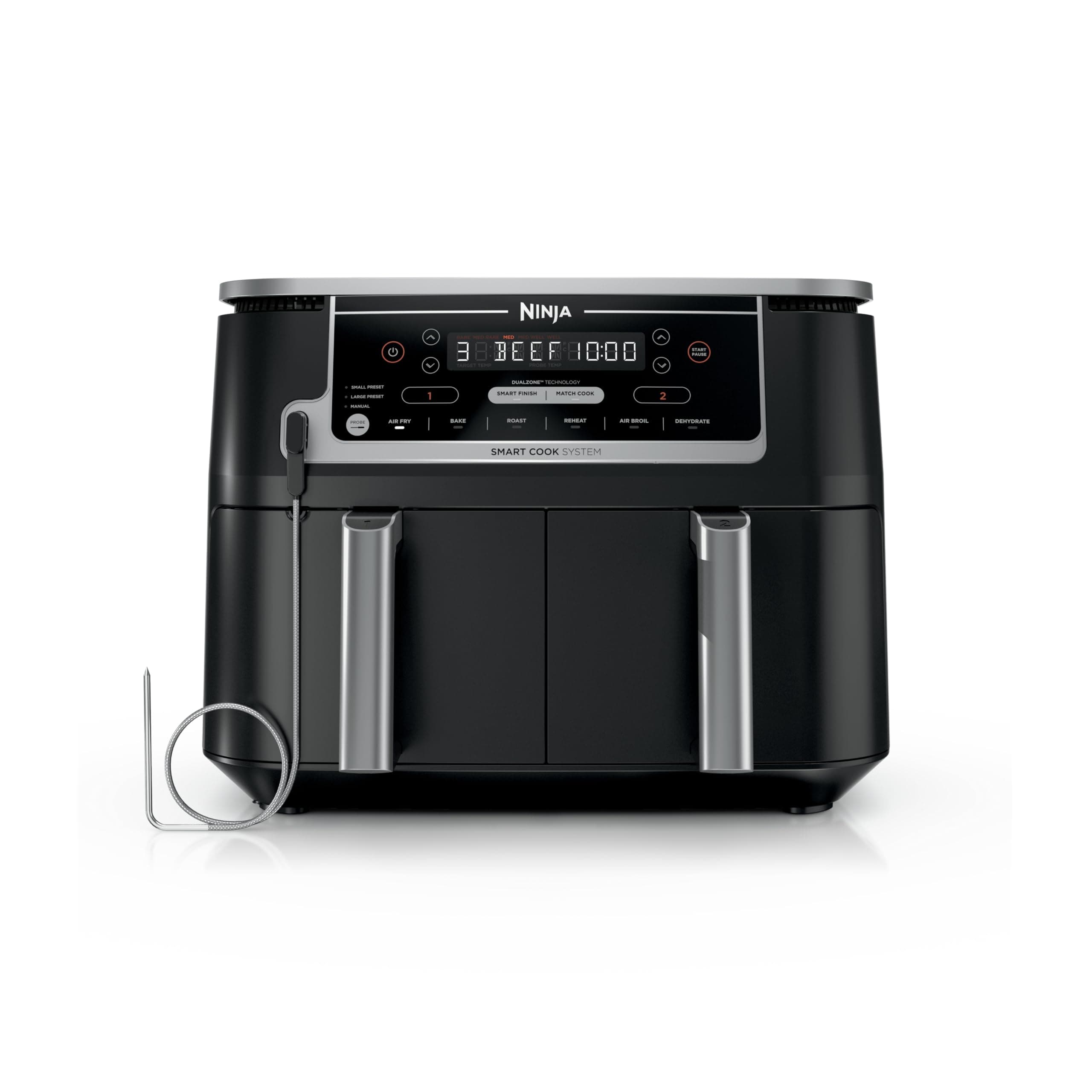
- 450°F max temperature is 50°F lower than the Instant Vortex Plus Rotisserie 10 and Ninja DZ550 Independent Thermometer Dehydrate — expect longer cook times for crispy textures
- 3.5-quart capacity maxes out at 2-3 servings — not practical for families of 5 or bulk meal prep
- Ceramic coating durability is the biggest risk: some users report peeling after 6-12 months of daily use
Best for: budget-conscious singles and couples who prioritize easy cleanup and don't need large-batch capacity.
TurboBlaze Premium Ceramic Coating 90°C 450°F
budget-conscious singles and couples seeking an affordable entry point without hand-washing hassle