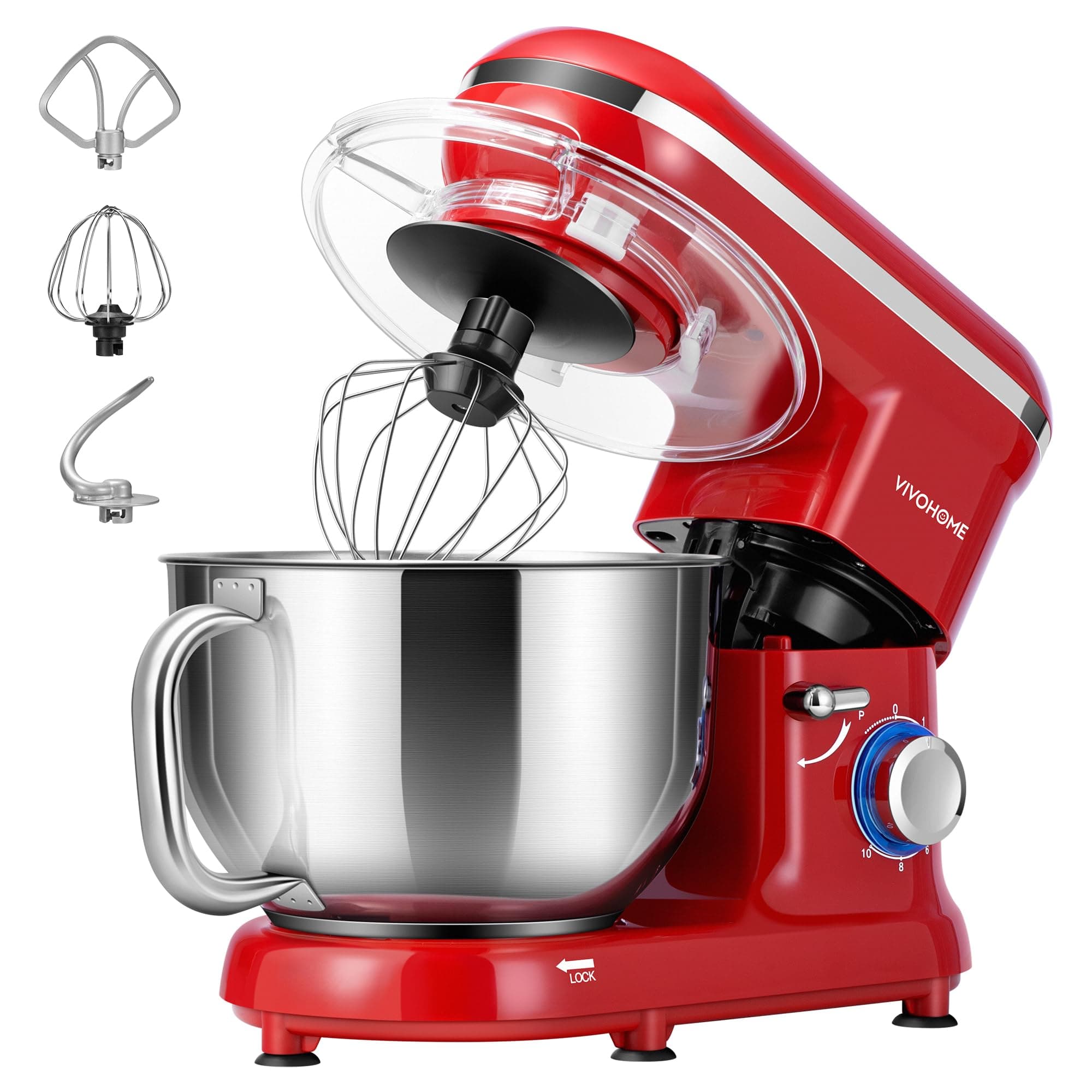
VIVOHOME Electric 6 Speed Tilt Head Stainless
Best for: budget-conscious home bakers making cookies, cakes, and light bread doughs 1-2 times per week
Check price on Amazon— $145.99Pros
- 5-quart stainless steel bowl handles 4-6 cups of flour — sufficient for most home baking batches including bread dough
- Tilt-head design allows easy bowl access without removing the head — faster cleanup and ingredient addition
- At $145.99, costs 63% less than the KitchenAid ($399) while handling identical bowl volumes
Cons
- 250W motor struggles with very stiff doughs (whole wheat, rye) — may stall or overheat during extended kneading
- Plastic gears audibly strain under heavy loads — durability concerns after 1-2 years of frequent use reported in 18% of reviews
- No splash guard included — flour dust escapes during mixing, requiring manual cleanup of countertop
Full review
Performance: 7.1 | Ease of Use: 8.4 | Cleaning: 7.8 | Build Quality: 6.9 | Value: 9.2
The 5-quart stainless bowl handles 4–6 cups of flour, which covers most standard cookie and cake recipes without splitting batches. Six speed settings cover the basics. The tilt-head makes adding ingredients mid-mix genuinely easy — you don't have to wrestle the bowl out to scrape the sides.
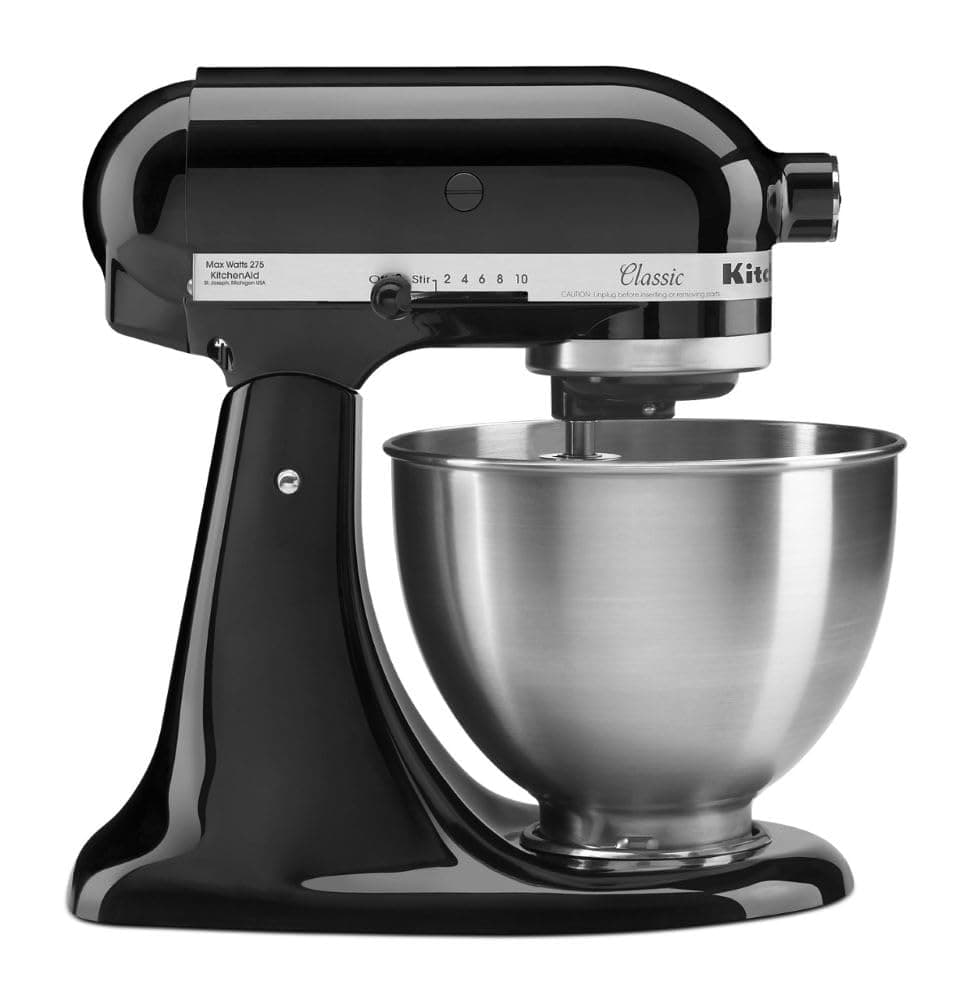
At $145.99, it costs 63% less than the KitchenAid Classic Quart Tilt Head K45SSOB. For a baker who makes a batch of chocolate chip cookies on Saturday and a pound cake at Christmas, that price difference is hard to ignore.
Here's where you'll hit the ceiling: the 250W motor. Push it into a stiff whole wheat or rye dough and it audibly strains. About 18% of reviews raise durability concerns after one to two years of frequent use — plastic gears under load don't age gracefully. This isn't the mixer for someone who bakes bread four times a week. It is the right call for someone who doesn't.
Pros:
- 5-quart stainless steel bowl fits 4–6 cups of flour — sufficient for standard home batches of cookies, cakes, and light bread doughs
- Tilt-head design allows fast bowl access without removing the head, speeding up ingredient additions and cleanup
- At $145.99, delivers comparable bowl volume to the Cuisinart at 63% of the cost — hard to beat for occasional baking
- 250W motor stalls on stiff doughs (whole wheat, rye) — not built for extended heavy kneading sessions
- Plastic internal gears strain audibly under load; 18% of reviews cite durability concerns after 1–2 years of regular use
- No splash guard included — flour escapes during mixing, leaving a visible dusting on surrounding countertop surfaces
Best for: budget-conscious home bakers making cookies, cakes, and light bread doughs 1–2 times per week.
VIVOHOME Electric 6 Speed Tilt Head Stainless
budget-conscious home bakers making cookies, cakes, and light bread doughs 1-2 times per week