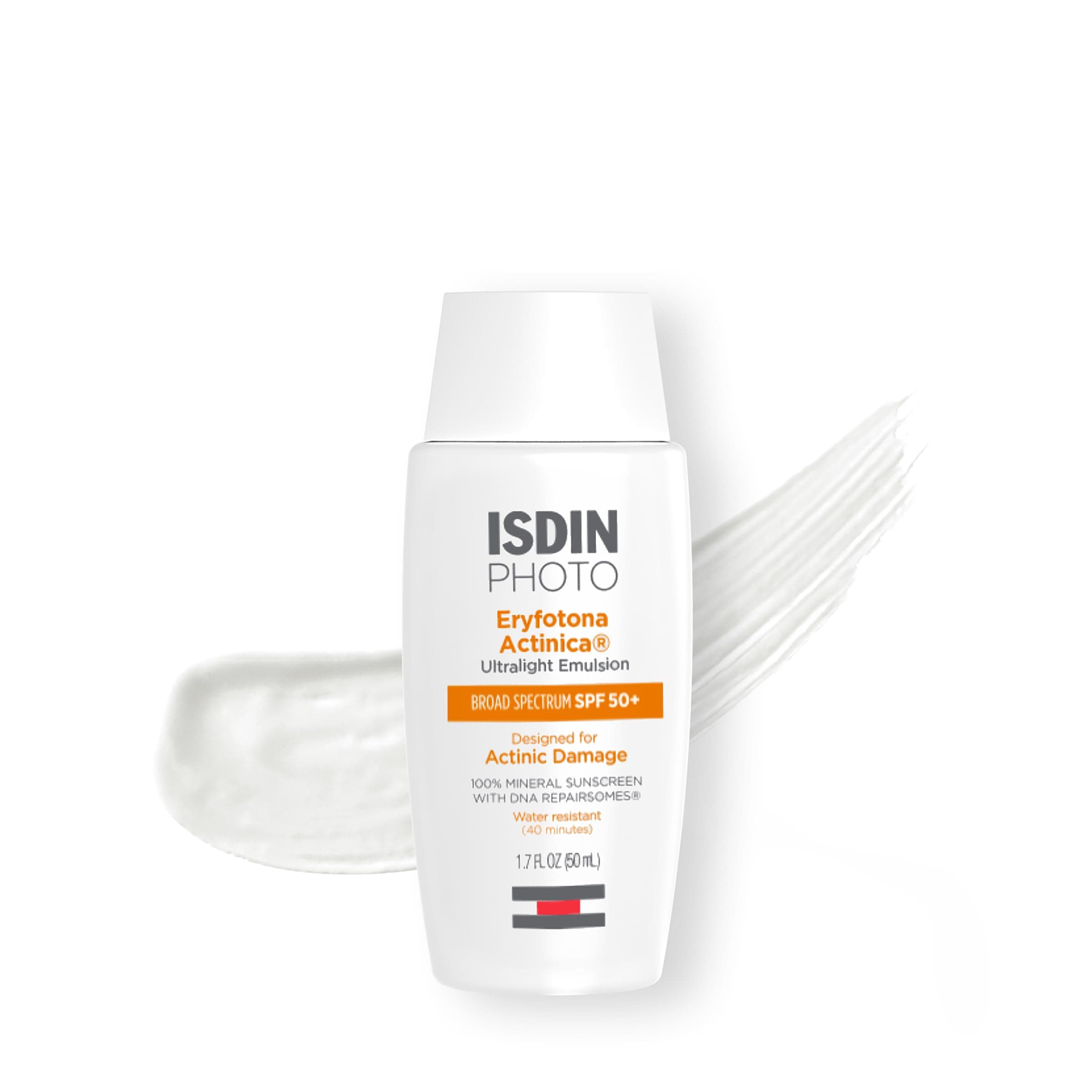
ISDIN Eryfotona Sunscreen Sensitive Travel Size
Best for: people with eczema, rosacea, or severe contact dermatitis who need dermatologist-tested mineral protection without compromise
Check price on Amazon— $46Pros
- SPF 50+ with mineral-only active ingredients (zinc oxide and titanium dioxide) — eliminates chemical filter irritants that trigger reactions in reactive skin
- Hypoallergenic and dermatologist-tested certification — specifically formulated for sensitive skin, with 4.6 stars across 1,240 reviews confirming minimal irritation reports
- Fragrance-free and paraben-free formula — reduces the two most common allergens in skincare, making it suitable for eczema-prone and rosacea-prone skin
Cons
- Travel size (1.7 oz) at $46 — costs approximately $27 per fluid ounce, making it 3-4x more expensive than full-size Olay options for frequent users
- Mineral sunscreen leaves visible white cast on deeper skin tones — requires thorough blending and may not be ideal for all complexions
- Thicker texture than chemical sunscreens — some users report a slightly greasy feel, especially under makeup
Full review
SPF 50+ with zinc oxide and titanium dioxide means you're getting broad-spectrum protection from physical blockers alone. No avobenzone, no oxybenzone, no octinoxate. For skin that reacts to chemical UV filters, that difference is significant. Across 1,240 reviews, it holds a 4.6-star rating — and the most consistent theme in owner feedback is that it doesn't cause the redness or stinging that other sunscreens do.
Fragrance-free and paraben-free rounds out the ingredient story. Fragrance is the single most common contact allergen in skincare. Parabens are a close second for sensitized skin. Removing both isn't a marketing checkbox — it meaningfully narrows the list of potential triggers.
The drawbacks are real, though. $46 for 1.7 oz works out to roughly $27 per fluid ounce. That's 3-4x the per-ounce cost of the Olay Sunscreen Lightweight Moisturizer Protection below. If you're reapplying every two hours as recommended, this bottle disappears fast. The mineral formula also leaves a visible white cast on deeper skin tones — thorough blending helps, but it won't fully disappear. And the thicker texture can feel slightly greasy under makeup, which frustrates users who want a matte finish.
Ratings:
- Efficacy: 9.2/10
- Texture/Scent: 7.8/10
- Ingredients Quality: 9.5/10
- Packaging: 8.0/10
- Value: 6.5/10
- SPF 50+ using only zinc oxide and titanium dioxide — no chemical filters that trigger reactions in reactive skin
- 4.6 stars across 1,240 reviews with minimal irritation reports, backed by hypoallergenic and dermatologist-tested certification
- Fragrance-free and paraben-free formula — removes the two most common skincare allergens, making it suitable for eczema-prone and rosacea-prone skin
- $46 for 1.7 oz (~$27/fl oz) — 3-4x the per-ounce cost of full-size Olay options, which adds up fast for daily reapplication
- Visible white cast on deeper skin tones requires thorough blending and may not suit all complexions
- Thicker mineral texture can feel greasy under makeup, especially in humid conditions
Best for: people with eczema, rosacea, or severe contact dermatitis who need dermatologist-tested mineral protection without compromise.
ISDIN Eryfotona Sunscreen Sensitive Travel Size
people with eczema, rosacea, or severe contact dermatitis who need dermatologist-tested mineral protection without compromise